Hantavirus Infections Cruise Ship: 2026 Outbreak Investigation
Hantavirus Infections Cruise Ship: Navigating the 2026 Health Crisis
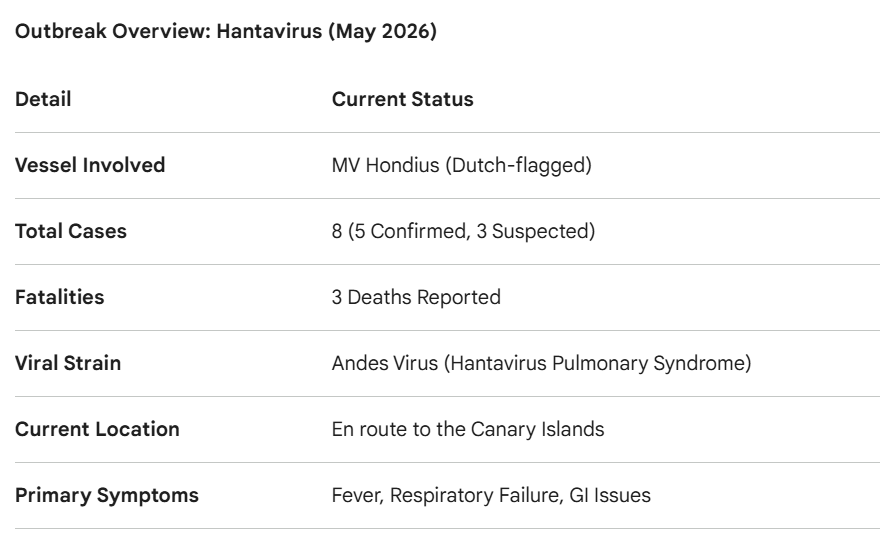
The global health community is currently monitoring a series of hantavirus infections cruise ship cases linked to the MV Hondius. On May 8, 2026, the World Health Organization (WHO) confirmed that the outbreak has resulted in eight reported cases, including three fatalities. Undoubtedly, the situation has sparked concern among international travelers as the vessel remains under strict medical observation. This rare cluster of infections highlights the challenges of managing zoonotic diseases within confined maritime environments.
Investigation into the MV Hondius Outbreak
The timeline of the hantavirus infections cruise ship incident began after the vessel departed Ushuaia, Argentina, in early April. Specifically, health officials suspect the initial exposure occurred before the passengers boarded, possibly during terrestrial activities in South America. Moreover, laboratory testing has identified the Andes virus strain, which is uniquely known for its potential for limited human-to-human transmission. Consequently, the WHO has implemented rigorous isolation protocols to prevent further spread among the 147 passengers and crew.
Understanding Symptoms and Transmission
Understanding the nature of hantavirus infections cruise ship is vital for traveler safety. First of all, the virus typically spreads through contact with rodent droppings, urine, or saliva. In addition, symptoms often begin with a sudden fever and muscle aches, rapidly progressing to severe respiratory failure as fluid fills the lungs. Therefore, medical teams in Cape Verde and South Africa are working tirelessly to provide supportive care and specialized evacuations for those in critical condition.
Global Response and Repatriation Plans
The response to the hantavirus infections cruise ship alert involves multiple nations, including Spain, the Netherlands, and the UK. Furthermore, specialized medical aircraft have already evacuated the most vulnerable patients to advanced care facilities in Switzerland and the Netherlands. As a result, the ship is now sailing toward Tenerife, where remaining passengers will finally undergo repatriation. Clearly, while the risk to the general public remains low, heightened vigilance is required for those who recently traveled through South American rodent habitats.
Safety Recommendations for Travelers
For those following the hantavirus infections cruise ship news, prevention remains the most effective tool. Actually, travelers should avoid areas with signs of rodent activity and practice high-level hygiene when visiting rural regions. Finally, for the latest global health trends and digital updates, stay connected with us at awanphotostat.pk. Our team provides real-time information to keep you informed and safe in an ever-changing world.
Conclusion
The hantavirus infections cruise ship outbreak serves as a stark reminder of the complexities of global travel health. Certainly, the rapid international response has helped contain what could have been a much larger crisis. Ultimately, we look forward to the full recovery of the surviving passengers and the safe return of the crew.
What are your thoughts on the safety protocols currently in place for international cruises? Share your perspective in the comments below!