AI Product Photography 2026: Low-Cost, Studio-Quality Visuals for E-commerce
AI Product Photography 2026: Low-Cost, Studio-Quality Visuals
The landscape of online retail has been permanently altered by AI Product Photography 2026. In an era where 67% of consumers value image quality over product descriptions, the ability to generate high-resolution, trustworthy visuals is a matter of survival. Certainly, businesses using AI-powered solutions have seen a reduction in production costs by up to 80%, allowing even small brands to compete with global giants.
Why AI Photography is Essential in 2026
Traditional photoshoots are no longer the primary way to build a catalog. First and foremost, AI tools now offer “Product Preservation,” ensuring that logos, textures, and proportions remain 100% accurate without “hallucinating” extra details. Furthermore, high-resolution AI photos can yield a 94% higher conversion rate compared to lower-quality alternatives. Consequently, e-commerce owners are shifting toward a hybrid workflow that combines AI generation with human creative direction.
1. The Rise of “Authentic” AI Imagery
In 2026, the trend has shifted away from “perfect” AI towards visuals that feel real. First of all, creators are now embracing light leaks, film grain, and natural skin textures to build emotional trust with their audience. Moreover, nostalgic ’70s and ’80s retro aesthetics are making a massive comeback in product staging. Certainly, an image that feels like an authentic moment captured on a phone often outperforms a pristine studio shot.
2. Mastery of Biometric Rendering and Scale
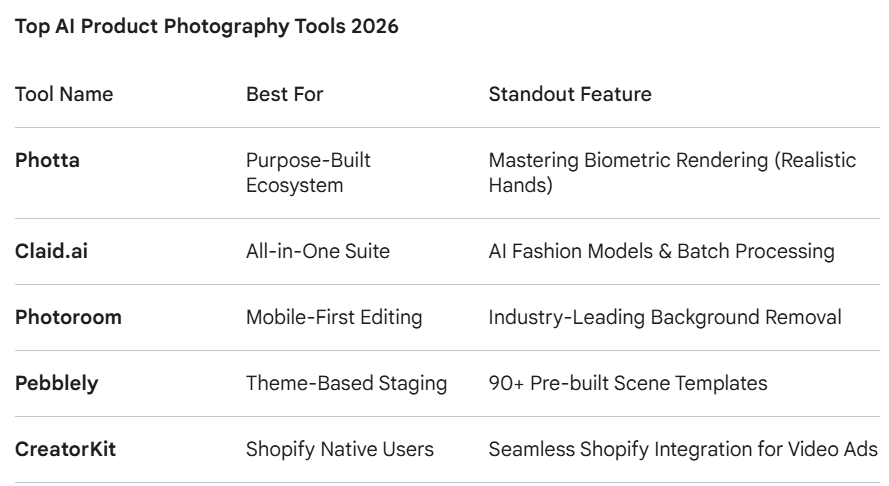
One of the biggest breakthroughs in 2026 is the perfection of “In-Hand” shots. First of all, early AI struggled with human hands, but modern platforms like Photta have mastered biometric rendering, allowing you to show your product being held flawlessly. In addition, this helps establish “Scale,” which is critical for categories like cosmetics, electronics, and accessories. Consequently, customers have more confidence in the actual size and feel of the product they are ordering.
3. Scaling Your Catalog with AI Consistency
For brands with thousands of SKUs, maintaining a uniform look is a major challenge. First of all, “Style-Locking” technology allows you to extract lighting, color grading, and composition from one reference image and apply it across your entire catalog. Moreover, tools like Claid offer batch processing that can clean up and stage 50 to 250 images in minutes. Certainly, this ensures a professional, consistent grid on your website and social media platforms.
Conclusion
Adopting AI Product Photography 2026 is no longer just about saving money; it’s about speed, consistency, and creative freedom. Therefore, instead of waiting weeks for a studio schedule, you can now launch new products and update visuals in minutes. Certainly, the future of e-commerce is visually driven and AI-powered. Have you tried replacing your traditional photoshoots with AI yet? Let us know in the comments!