Spatial Computing 2026: Is Apple Vision Pro 2 the End of Physical Monitors?
Spatial Computing 2026: How Apple Vision Pro 2 is Redefining Reality
The evolution of Spatial Computing 2026 has reached a tipping point where digital and physical worlds are becoming indistinguishable. With the recent leaks of the Apple Vision Pro 2, the dream of a “monitor-less” workspace is finally becoming a reality for millions of professionals. Certainly, this technology is not just for gaming anymore; it is the next major computing platform after the smartphone.
The Breakthrough of 2026: Apple Vision Pro 2 Leaks
The tech world is buzzing with the latest reports from the supply chain. First and foremost, the new Vision Pro 2 is rumored to feature the revolutionary M5 “Fusion” Chip, built on a 2nm architecture. Furthermore, it is expected to solve the “weight” problem of the first generation by using a new magnesium-aluminum alloy. Consequently, users will be able to wear the headset for hours without discomfort, making it a viable laptop replacement.
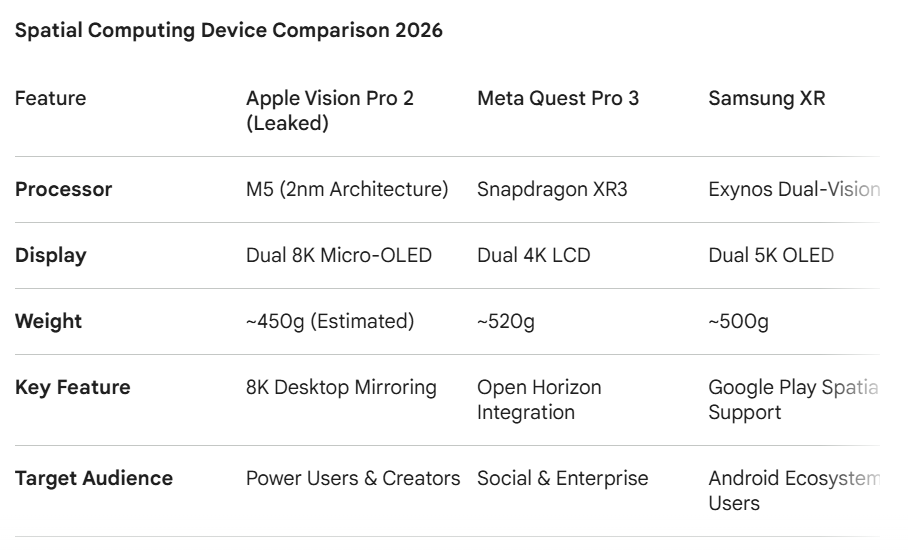
1. 8K Desktop Mirroring: The End of Monitors
One of the most exciting features of Spatial Computing 2026 is the ability to project an 8K ultra-wide virtual display from your MacBook. First of all, you no longer need three physical monitors on your desk; you can simply “open” them in thin air. However, the real magic is in the clarity—text is as sharp as a physical 5K display. In addition, this allows for a massive productivity boost for video editors and developers who need extra screen real estate.
2. Spatial AI and Intuitive Interfaces
Interfaces are becoming more human-centric. First of all, with the new AG-UI (Agent-User Interaction) protocol, you don’t need to click buttons; you can just look at an object and speak a command. Moreover, AI agents now live “inside” your spatial environment, helping you organize files or 3D models in real-time. Certainly, this seamless integration of AI and spatial hardware is the core of Spatial Computing 2026.
3. Global Adoption in Education and Healthcare
Beyond the office, spatial tech is transforming lives. First of all, medical students are now practicing complex surgeries in full 3D environments before entering an actual OR. In addition, global classrooms allow students from different continents to sit together in a virtual historical site. Consequently, the limitations of physical distance are being erased, creating a truly global learning experience.
Conclusion
Spatial Computing 2026 is the most significant shift in how we interact with information since the launch of the original iPhone. Therefore, investing in this ecosystem—whether as a creator or an early adopter—is a smart move for the future. Certainly, the era of being tethered to a physical screen is coming to an end. What feature are you most excited about in the Apple Vision Pro 2? Let us know in the comments!