Emotion AI in Marketing 2026: The Rise of Affective Computing in Retail
Emotion AI in Marketing 2026: Scaling Empathy in Advertising
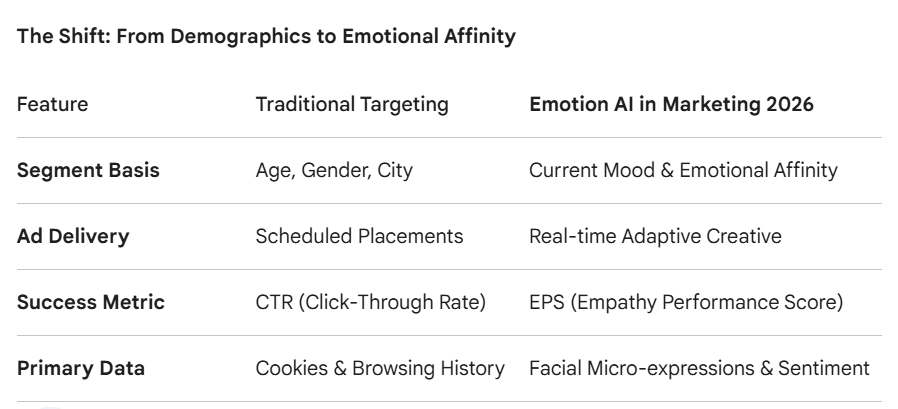
Emotion AI in Marketing 2026 has transformed digital advertising from a guessing game into a precise science of empathy. Certainly, brands are no longer just targeting your age or location; they are targeting your current emotional state. By May 2026, the emotional AI market has surged to over $35 billion, as systems gain the ability to detect subtle human signals—like facial micro-expressions and vocal tones—to adapt messaging in real time.
Understanding the “Empathy Algorithm”
In the era of Emotion AI in Marketing 2026, AI doesn’t “feel,” but it recognizes patterns of emotion with incredible accuracy. First and foremost, neural networks analyze “Valence” (joy vs. sadness) and “Arousal” (calm vs. excited) to determine a brand’s positivity and energy levels. Furthermore, this data allows platforms like Meta and Google to prioritize ads that trigger high-engagement signals like “awe” or “nostalgia”.
1. Real-Time Adaptive Creatives
The core of Emotion AI in Marketing 2026 lies in its ability to change an ad’s tone on the fly. First of all, generative models now tailor the voice speed, energy, and even the actor’s expression in a video ad based on the viewer’s sentiment. Moreover, if a user shows signs of frustration, the AI might switch from a high-energy sales pitch to a calm, trust-building message. Consequently, the gap between digital content and human connection is finally closing.
2. Emotional Optimization in Major Platforms
Major advertising networks have fully integrated these features by mid-2026. First of all, Meta’s Lattice 3.0 now evaluates emotional reactions to Reels in real-time, giving delivery priority to ads that spark genuine joy. In addition, YouTube’s AdVibe Beta allows brands to analyze thousands of facial data points from test audiences before a campaign even launches. Certainly, this ensures that creative directors can design “emotion as a variable” while scripts are still in the draft stage.
3. Ethical Boundaries and Global Standards
While Emotion AI in Marketing 2026 offers massive potential, it also demands strict ethical guardrails. First of all, responsible marketers must prioritize transparency and explicit consent when collecting biometric or emotional data. Furthermore, global regulations now prohibit the manipulation of negative states like fear or intense sadness for commercial gain. Therefore, the winning brands of 2026 will be those that build trust by using AI to assist the customer, not exploit them.
Conclusion
The rise of Emotion AI in Marketing 2026 marks the end of “one-size-fits-all” advertising. Therefore, stop thinking about what your customers are and start focusing on how they feel. Certainly, in a world of algorithmic noise, the brands that can scale empathy will be the ones that capture the heartbeat of the market.
Are you integrating emotional triggers into your 2026 ad sets? Join the conversation below!