Hyper-Local SEO 2.0: The Proximity Revolution in Digital Marketing
Hyper-Local SEO 2.0: Winning the “Right Here” Economy in 2026
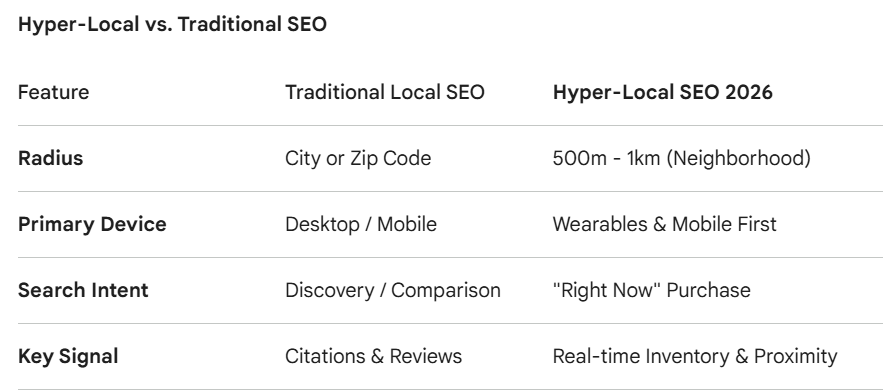
Hyper-Local SEO 2026 has evolved far beyond simple “near me” keywords. First and foremost, in May 2026, mobile searches have become intensely geo-specific, with users demanding instant gratification for services and products within their immediate vicinity. This shift, often called the “Proximity Revolution,” is where brands are winning or losing the battle for the digital shelf.
The Shift from “Near Me” to “Right Here”
In 2026, the traditional search intent has sharpened. Moreover, consumers now expect search engines to know their exact floor in a mall or their specific street corner to provide real-time results. Consequently, if your e-commerce store or local business isn’t optimized for these micro-signals, you are invisible to the most high-intent shoppers.
1. Real-Time Inventory Syncing
The backbone of Hyper-Local SEO 2026 is the integration of live stock levels with search results. First of all, search engines now prioritize businesses that can prove a product is “on the shelf” at that very moment. In addition, for Shopify owners, this means your “Local Inventory Ads” must be perfectly synced with your physical or warehouse locations to capture “Answer Engine” queries like “Who has Posha Bliss in stock within 2km?”
2. Augmented Reality (AR) in Local Discovery
One of the most exciting aspects of Hyper-Local SEO 2026 is the use of AR to bridge the gap between digital content and the physical world. Certainly, 71% of consumers now state they would shop more if AR tools were available for discovery. Furthermore, AR allows customers to virtually “see” products in their local context or try them on before even leaving their house, which drastically increases local conversion rates and reduces returns.
3. First-Party Data & Hyper-Personalization
With privacy rules becoming more stringent in 2026, first-party data is now non-negotiable. First of all, brands must use their own customer data—such as past purchase history and local browsing behavior—to deliver personalized experiences that feel relevant to the user’s current location. Therefore, the goal is to create a seamless journey where an ad isn’t just a pitch, but a helpful suggestion based on where the customer is standing.
Strategy Tip: Use the “fan-out” technique in your content. Start with a direct, one-sentence answer to a local query, then expand into the details to satisfy both Answer Engines (AEO) and human readers.
Conclusion
Success in Hyper-Local SEO 2026 requires a move away from generic optimization toward neighborhood-level precision. Therefore, by focusing on real-time data, AR integration, and authentic local connections, you can turn a global brand into a local favorite. Certainly, in the “Right Here” economy, the fastest and most relevant brand always wins.
Are you ready to claim your neighborhood? Drop a comment on how you’re optimizing for local intent this year!