Spatial Commerce 2026: Transforming Shopify with Apple Vision Pro 2
Spatial Commerce 2026: Transforming Shopify with Apple Vision Pro 2
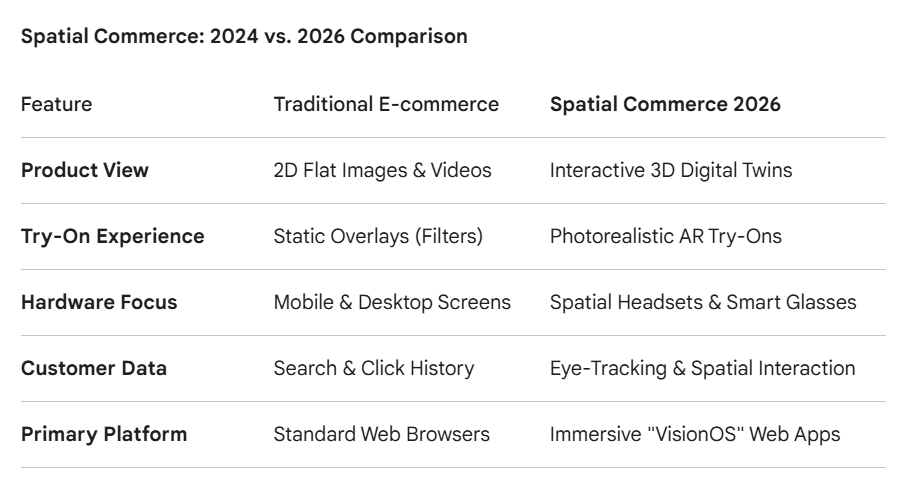
Spatial Commerce 2026 is the next major frontier for online brands, marking a shift from scrolling through flat images to interacting with products in 3D space. With the official rollout of the Apple Vision Pro 2, featuring the powerful M5 chip, spatial computing has moved from an enterprise luxury to a consumer standard. This technology allows shoppers to place life-sized digital versions of products—from skincare sets to furniture—directly into their physical environment. Certainly, 2026 is the year when the “digital shelf” officially becomes a “spatial scene.”
Why 3D Visualization is a Sales Powerhouse
In the current landscape of Spatial Commerce 2026, engagement is no longer measured in clicks, but in interaction time. First and foremost, retailers using 3D renders on their sites have seen cart addition rates increase by over 40% compared to previous years. Furthermore, 3D product configurators allow customers to rotate, open, and customize items, which significantly reduces purchase uncertainty and returns. Consequently, brands that prioritize spatial assets are seeing a much higher return on their marketing spend.
1. The Impact of Apple Vision Pro 2 on Retail
The launch of the Vision Pro 2 has catalyzed the entire Spatial Commerce 2026 ecosystem. First of all, the device’s faster M5 processor and crisper displays make virtual products look indistinguishable from reality. Moreover, Shopify has launched native “Spatial Apps” that allow merchants to create 3D storefronts with a single click. In addition, Apple’s expansion into immersive live broadcasts, like F1 racing, is creating new opportunities for “In-Experience” shopping where viewers can buy team gear directly from the virtual trackside.
2. Spatial Commerce in the FMCG and Beauty Sectors
One of the most exciting Spatial Commerce 2026 trends is its application in fast-moving consumer goods (FMCG). First of all, beauty brands are using AR to let customers “test” skincare textures and fragrance vibes in a virtual environment. Furthermore, interactive product information and real-time wayfinding are bridging the gap between digital discovery and physical retail. Certainly, brands that lean into these immersive journeys are winning the loyalty of younger, tech-savvy Gen Z and Millennial audiences.
3. From Hyper-Personalization to AI Agents
In 2026, spatial tech and AI are converging to create hyper-personalized shopping. First of all, AI-powered wearables now provide real-time recommendations as you browse physical or virtual aisles. In addition, the use of “Zero-Party Data”—where users willingly share their preferences via spatial quizzes—helps brands curate 3D collections for each individual shopper. Consequently, the customer relationship has transformed into a dynamic, ongoing dialogue within a context-aware environment.
Conclusion
Adopting Spatial Commerce 2026 strategies is no longer a futuristic choice; it is a current business necessity. Therefore, if your brand isn’t preparing 3D assets and AR-friendly product pages, you are missing out on the most immersive sales channel in history. Certainly, the era of 2D dominance is ending, and the era of the spatial, 3D web has begun.
Are you ready to bring your products into your customers’ living rooms? Let us know in the comments below!